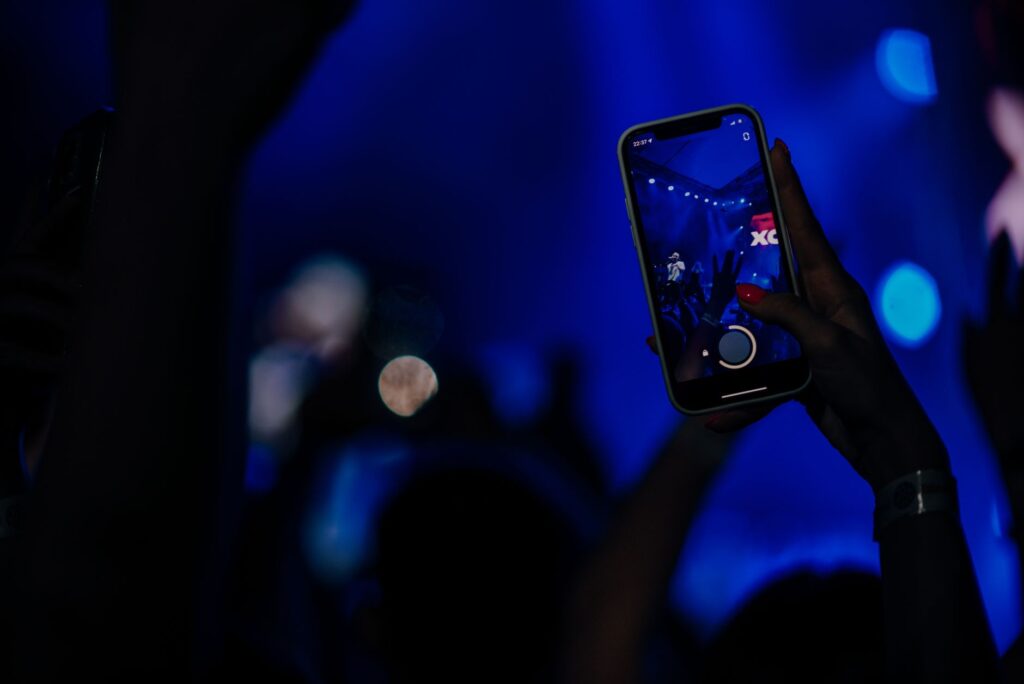
Picture this: two DJs, equally talented, equally dedicated, both spending years honing their craft in sweaty rehearsal rooms and late-night club booths. One books a residency at a top-tier festival. The other struggles to land a paid gig at a local venue. The difference? One has 200,000 Instagram followers and a viral TikTok series. The other has neither. In 2026, this is not an edge case. It is the default reality of the electronic music industry, and the numbers are impossible to ignore.
The Algorithmic Takeover of DJ Bookings
The criteria that once defined a DJ’s commercial value have shifted dramatically. Skill and musical ability used to dominate the conversation around booking fees and venue selection. Today, digital metrics , including Instagram followers, Spotify monthly listeners, and TikTok engagement rates , carry comparable or greater weight in many booking conversations, according to reporting by Hype Factor in 2025.
Booking agents and festival programmers are not hiding this reality. Conversations across the industry point to a clear pattern: if an artist’s music is generating streams but their social presence is minimal, many agencies now consider that a financial risk they are not willing to take. This sentiment, surfaced through research into emerging DJ booking practices, captures the cold logic behind modern talent acquisition. Visibility is revenue potential, and revenue potential drives decisions.
According to a 2025 analysis from Pollstar, mid-tier electronic music festivals increasingly require artists to meet minimum follower thresholds before even entering preliminary booking discussions. The threshold varies by event size, but the underlying principle is consistent: your audience earns you a seat at the table before your music ever gets a chance to speak.
Why 31% of Emerging DJs Are Walking Away
The pressure is not abstract. It is measurable in burnout statistics and career exits. Research published in 2025 found that 31% of emerging DJs cited social media pressure as a primary reason for leaving music entirely. That figure deserves a moment’s reflection. Nearly a third of the next generation of electronic music talent is being pushed out , not by a lack of ability, but by the psychological and strategic burden of algorithm management.
The root of this exodus is a fundamental mismatch between why most DJs start and what the industry now demands. People enter electronic music because of a deep love for sound, for the energy of a dancefloor, for the craft of reading a crowd. They are not, by default, content strategists or social media brand managers. Yet in 2026, those skills have become non-negotiable for career survival across most mainstream pathways.
The Content Treadmill
Platforms like TikTok and Instagram reward consistency above almost everything else. Algorithms punish inactivity with brutal efficiency. A DJ who posts daily, engages with comments, and participates in trending audio formats will receive dramatically more algorithmic distribution than one who posts sporadically , regardless of the quality difference between the content. This structural incentive forces DJs into a content production cycle that competes directly with the time and energy needed to develop actual musical skills.
The math is unforgiving. A professional-quality mix set might take eight to twelve hours to prepare, record, and edit. A thirty-second TikTok clip can be produced in under an hour and may generate ten times the reach. From a pure return-on-investment standpoint, the algorithm sends an unmistakable message about where a DJ’s time should go.
Streaming Numbers as Social Proof, Not Musical Proof
Spotify streams have entered the booking equation in ways that would have seemed absurd a decade ago. Monthly listener counts are now referenced in booking negotiations as proxies for audience size and ticket-selling potential, even though the relationship between streaming numbers and live attendance is far from linear.
A DJ with 500,000 monthly Spotify listeners commands a different conversation than one with 50,000 , even if the latter is a more technically accomplished performer with a deeper understanding of club culture. Labels and management companies have internalized this calculus, and it filters down through every layer of the industry ecosystem.
The rise of playlist placement as a career lever has added another dimension. According to a 2025 Music Business Worldwide report, electronic music artists who secure placement on major Spotify editorial playlists see an average 40% increase in booking inquiries within 90 days. The music itself becomes almost secondary. The metric is the message.
When the Algorithm Rewards the Familiar
There is a deeper artistic cost embedded in this system. Algorithms favour content that performs, and content that performs tends to resemble content that has already performed. This creates a structural pressure toward sonic and visual conformity that works directly against the kind of artistic risk-taking that has historically driven electronic music forward.
Genre innovation, unconventional set structures, challenging or unfamiliar music choices , these are the elements that define legendary DJ careers over time. They are also the elements least likely to go viral on a platform optimised for three-second attention spans.
The 20% That Still Matters More Than Ever
None of this makes skill irrelevant. A DJ with exceptional technical ability and a defined musical voice still holds a foundation that no follower count can replicate. The 20% of the equation that remains rooted in craft is not diminishing in importance, but it has become a floor rather than a ceiling.
The DJs who are building genuinely sustainable careers in 2026 tend to share a specific characteristic: they treat social media as a communication tool for their artistic identity rather than as the identity itself. They use content to translate their musical perspective into a language that algorithms can distribute, without allowing the algorithm to dictate the perspective.
Affordable gear, instant access to vast music libraries, and global distribution platforms have made entry into DJing easier than at any previous point in history. The barrier to starting has nearly disappeared. The barrier to sustaining has simply moved. It now lives inside a phone screen.
Rethinking What Success Looks Like
The 80/20 split framing this article is a provocation, not a precise formula. But the provocation points at something real. The industry infrastructure around DJing in 2026 disproportionately rewards visibility over virtuosity, and that gap is widening with each platform update and each booking contract that embeds social metrics into its criteria.
Understanding this reality is not the same as accepting it uncritically. There is a meaningful difference between adapting strategically to the environment and being consumed by it. The DJs who navigate this era most honestly are the ones who see the algorithm for exactly what it is: a distribution mechanism, not a measure of worth.
Electronic music has always been shaped by the tools and contexts available to its practitioners. Vinyl gave way to CDJs. CDJs gave way to digital controllers. Distribution moved from record shops to streaming platforms. The social media era is another chapter in that evolution, not the final one. What gets lost, and what gets carried forward, depends entirely on how clearly the people inside the culture can see what is actually happening to it.